

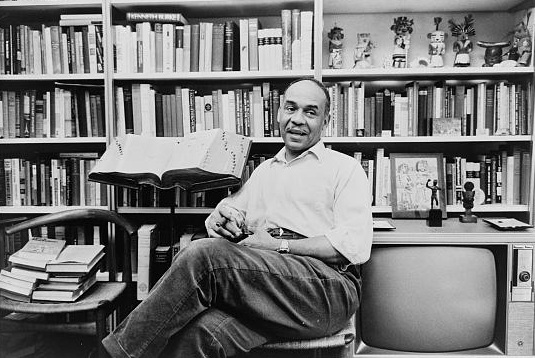
Second in the Series “WHERE THEY LIVED & SCRIBBLED”
by PortiaLily Taylor
Despite being famous for “Invisible Man,” few Oklahomans have been as visible as Ralph Waldo Ellison—a man who the New York Times once said is “among the gods of America’s literary Parnassus.” — Kennedy Parker
I discovered author, literary critic, and scholar Ralph Ellison when I was 18 and a student at a small college in northeastern Oklahoma.
Searching for a subject for my first college English paper, I wandered the shelves of the college library, looking for inspiration. After some time, I came across the book Invisible Man by Ralph Ellison. It is the story of a young Black man’s struggles in a racially divided society in which he feels “invisible.” Through flashbacks, many social and intellectual issues faced by African Americans are addressed.
I opened the book and read its first paragraph:
”I am an invisible man. No, I am not a spook like those who haunted Edgar Allan Poe; nor am I one of your Hollywood-movie ectoplasms. I am a man of substance, of flesh and bone, fiber and liquids – and I might even be said to possess a mind. I am invisible, understand, simply because people refuse to see me.” Ralph Ellison, Invisible Man, New York: Random House, 1952.
As a young women who also felt “invisible” at times, I immediately knew this was a novel I wanted to read, especially when I learned it had won the 1953 National Book Award. When I realized Ellison was a fellow Oklahoman who grew up in Oklahoma City as I had, I knew I had the subject for my college paper.
By the way, I still remember that I made an A!
OKLAHOMA CITY’S LASTING IMPACT ON ELLISON
Recently my husband and I traveled from Phoenix to Oklahoma City for my high school’s reunion activities. Since I’ve been writing about my visits to homes and workplaces of authors, I thought it would be a good time to visit places important to Ellison’s early life and learn how they influenced him.
Ellison once wrote, “My early emotions found existence in Oklahoma City…In houses and in drugstores and barbershops and downtown, all of the scenes, the sights, the localities that are meaningful to me are in that city; my father’s buried there, and of course all the people who were heroes to me as a kid, my role models.” [from Kennedy Parker’s article at My Early Emotions Found Existence in Oklahoma City: Ralph Ellison’s Time in OKC by Kennedy Parker]
Thanks to the metropolitan library system of Oklahoma County and the Ralph Ellison Foundation, it was easy to find these “Oklahoma …houses, drugstores, barbershops and downtown.” These two organizations have curated a driving tour of sites related to Ellison’s life in Oklahoma City. It begins at his birthplace and goes through places around the city that were meaningful to the author. Photos and text/audio descriptions are included. The tour may be found at Ralph Ellison Oklahoma City Tour.
As we drove in the area of downtown Oklahoma City called the Deep Deuce, we were surprised to find most of the buildings detailed in the online tour no longer exist. For example, modern condos are now located where once stood the house in which Ellison was born. On March 1, 1913, Ellison was born in the one-room apartment in the rear of a wood frame house at 407 East First Street his parents, Lewis and Ida Ellison, rented a one-room apartment in the rear of the wood frame house on this site owned by J. D. and Uretta Randolph.
Even the original structure of the Avery Chapel African Methodist Episcopal Church, the oldest African American congregation in Oklahoma City, is gone. After the death of his father, Ellison, his brother, and mother moved to the church parsonage in exchange for custodial duties. The young Ellison attended the church kindergarten in the building. It should be noted that the church is still going strong at its new location at 13th Street and Kelham.
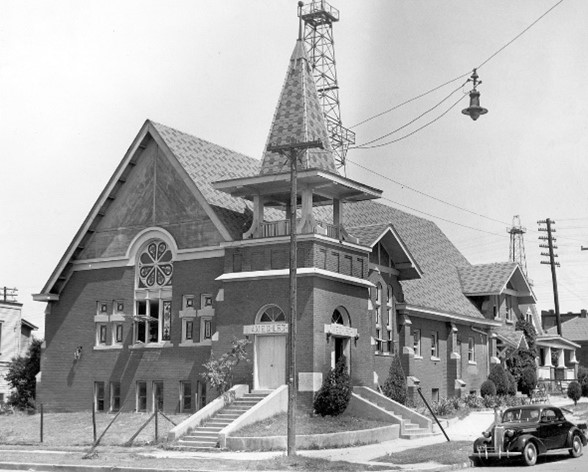
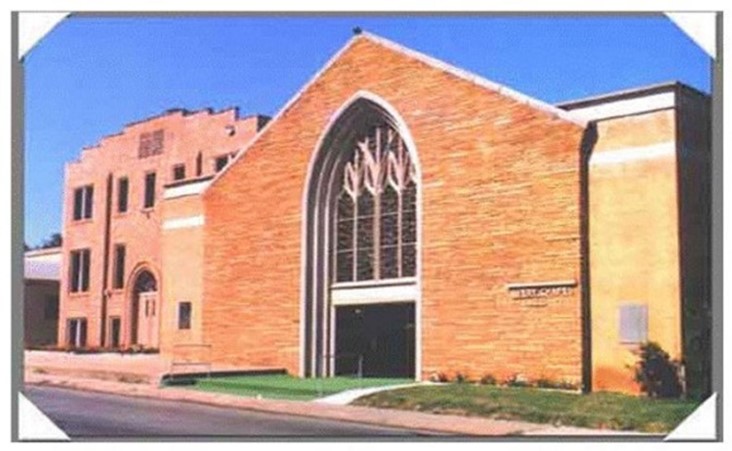
Images from Oklahoma County Library re Ellison Tour and Avery Chapel AME websites.
Several places in the “Deep Deuce” neighborhood played parts in Ellison’s life. Richardson’s Shoeshine Parlor was owned by a local bootlegger. In addition to getting a shoe shine, a person would get a drink and listen and dance to the latest music. Although young people weren’t allowed, young Ellison gained access by sweeping floors and shining shoes during the day so he could see shows at night. The Aldridge Theater was co-owned by Ellison’s the music teacher who was an important influence on him and local jazz greats. The theater hosted many jazz performers and screened movies. Young Ellison didn’t have enough money to buy a ticket so he’d listen in the alley. However, he was able to meet legends like Bessie Smith and Ma Rainey through his teacher. The area has changed, and apartments and shops now stand at these locations.
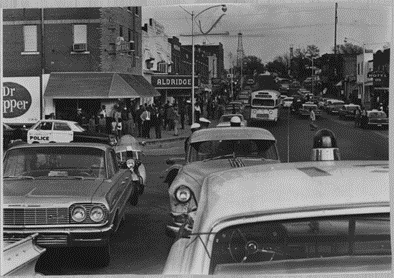
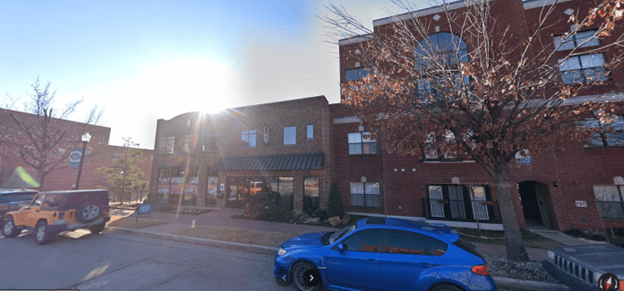
Images from Oklahoma County Library website re Ellison Tour
Music was an integral part of Ellison’s life…and later in his writings. Ellison played trumpet for his school’s (the segregated Douglas High School) marching band. Because of his talent, the head of the music department at an all-white high school gave Ellison private trumpet lessons in exchange for mowing his lawn. When the man allowed him to tag along to the symphony, Ellison was often the only Black person attending. He became so proficient that he received a music scholarship to Tuskegee Institute. However, he didn’t have the $36 for a train ticket to the Alabama university. Ellison then joined with an experienced hobo to ride the rails in the summer of 1933. The two jumped trains on the longer northern route to Alabama because of the dangers facing Black hobos in the Deep South.
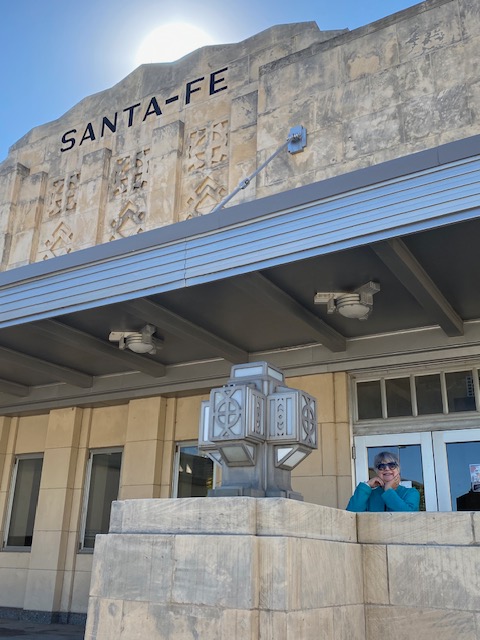
Photo of PortiaLily Taylor at the Oklahoma City Train Station taken by Bud Anderson.
Oklahoma City held many more memories for Ellison before he went on to become a celebrated author, critic, and scholar. He spent his later years in New York City but never forgot his Oklahoma routes. A 1976 article in the New Yorker magazine reflected on the impact of his early life.
“As one quickly gathers from his conversations and occasional writings, Ralph Ellison is much preoccupied…with the not so fashionable conviction that, when met with courage and determination, there is almost no predicament that cannot be converted into ‘benefits and victories.’ If Ellison…is asked to explain the source of this optimism…he is more than likely to point to his background as an Oklahoman—to the “sense of possibility” he developed while growing up in one of the younger states of the Union. Hardly anyone who has listened to him speaking about the Oklahoma of his boyhood can have failed to come away with the impression that it retains an exceptional influence upon his outlook, and that he continues to harbor an affection for the region which far exceeds what people ordinarily feel for distant places in which they were raised.” Ralph Ellison Goes Home by Jervis Anderson.
***
Zac Thompson stated at Frommers.com, “Though the best way to engage with great authors of the past is, of course, to read their work, there’s plenty to gain from visiting the places where they lived and scribbled. Touring writers’ preserved homes can help put their books in historical context or fulfill a quasi-religious need to pay homage to artists who speak to us with startling directness across distances and decades.” Writers in Residence: How to Visit Where Great American Authors Lived and Worked (frommers.com)
Who are your favorite authors? Have you ever visited places important in their lives? If not, I highly recommend going to places where they “lived and scribbled.” My trip to Oklahoma City was definitely enhanced by a tour of places in the Deep Deuce neighborhood where author Ralph Ellison once lived.
Title Image of Ralph Ellison from Library of Congress at Ralph Ellison | Read.gov – Library of Congress

 PortiaLily Taylor