

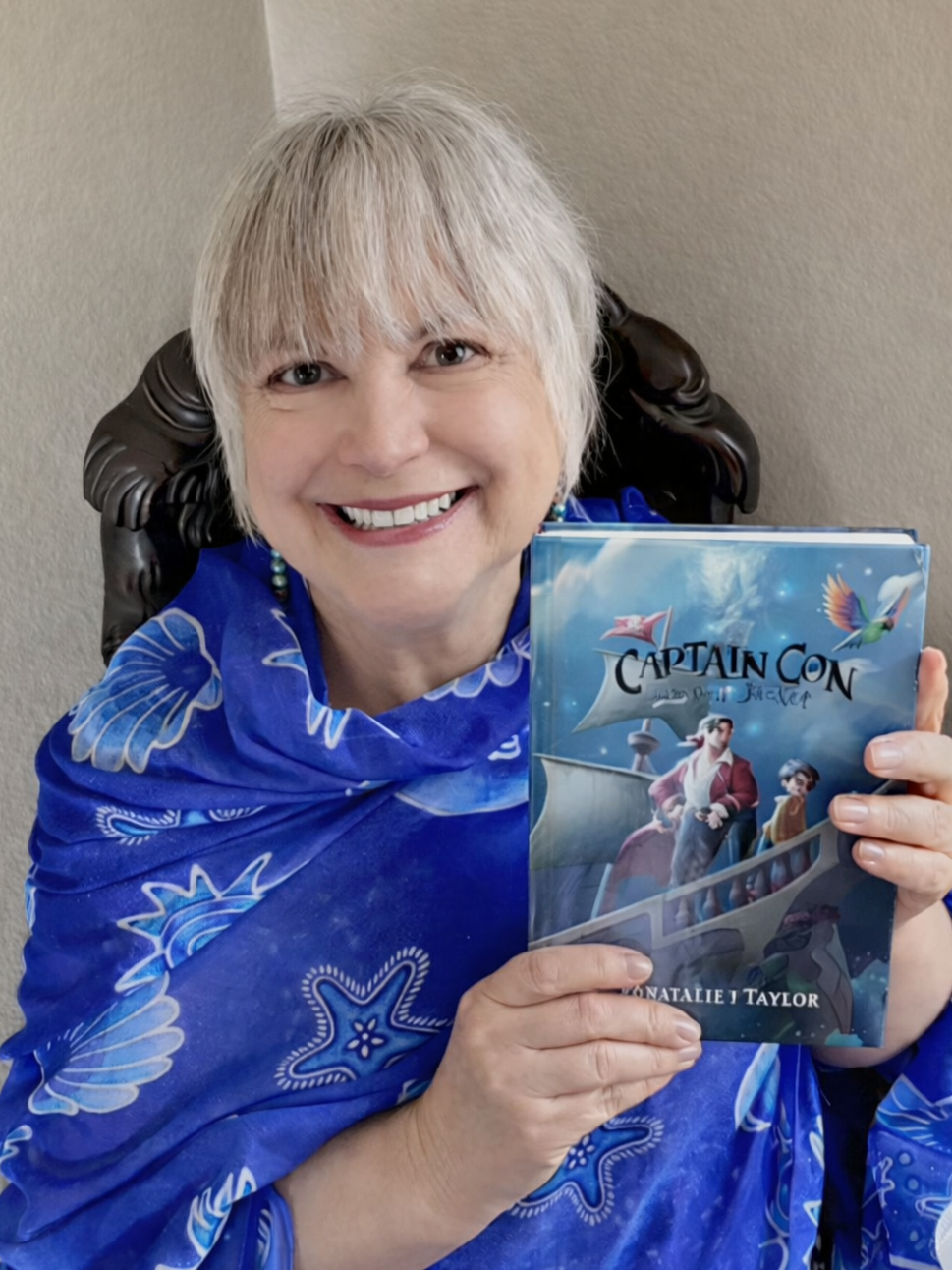
“People say ‘it only takes one yes,’ and it really is true. Rejection is so painful, but it’s all worth it when you get that yes.” ~ Author Beth O’Leary
Through my years working as an attorney and an educator, I still held my childhood desire to write stories with reluctant heroes and edge-of-your-seat adventures. I wanted to write beyond law and academia. I wanted to write fiction. So, for years, I took a variety of creative writing classes from shaping novels to crafting screenplays. And, based on these studies and my continued passion, I began to write my stories.
I must have started more than a dozen books over those years…and finished none. Work got in the way. Family got in the way. Procrastination got in the way. I moved from Oklahoma to Tennessee and then onto Arizona and Utah. When my husband and I moved back to Arizona, I finally had the time to start writing fiction in earnest.
But all those years of legal and academic writing stymied what I needed to write fiction. I joined several writers’ critique groups to help me with a transition to more creative writing. I remain grateful to those fellow writers who helped me understand the basics of fiction writing.
It wasn’t quick or easy. I started and stopped writing so many times. I even tried my hand at poetry, picture books, law guides, and more. I finally decided I need to get something out there, or I’d lose my motivation. I resurrected a screenplay I had written that was gathering virtual cobwebs on my computer and began its revision. Finally, I self-published my work, Shell Shock: a screenplay (the story of a WWI veteran who becomes a police officer in 1920 Ireland).
Now I was motivated to continue writing fiction with the goal of traditional publication. But where would I start? I needed to end my “scattered” approach to writing. So, I decided to focus on stories inspired by my two children. I worked and worked on those manuscripts that would become middle grade novels. The first story was set in 1963 rural Oklahoma with Cathryn as its protagonist. She’s a biracial girl who faces challenges from school bullies, her white grandfather, and even a tornado amidst the background of the Civil Rights Movement and the divine intervention of a mysterious old woman. The second manuscript centered on twelve-year-old Nick as he finds himself mysteriously transported into a world of pirates and sea battles where the thick glasses and eye patch he wears to correct a vision impairment are the sources of heroism and salvation and not the bullying he is used to.
By this time, children’s literature captivated my full attention. In addition to reading KidLit and studying the genre, I joined the Society of Children’s Book Writers and Illustrators and attended its local “mingles” where I learned (and still learn) from other KidLit authors.
When I thought my two manuscripts had reached a stage suitable for querying literary agents and independent publishers, I started sending out my manuscripts, hoping one would be accepted for publication. With those efforts began the trickle of responses from the queried agents and publishers. I say “trickle” because the process of submitting queries, having them considered, and hearing back from each contacted entity took many weeks and even months. And those responses were almost all rejections…short, AI-generated messages written to ease heartbreak in the most generic of robot-written language. But, worse than the rejections, was the silence of the agents and publishers who never responded.
Soon I decided to direct my energy on only one manuscript – the 1963 rural Oklahoma manuscript. However, the parade of declines continued. I tried to keep up my spirits by remembering the many celebrated authors who received numerous refusals before being published. J. K. Rowling was rejected by 12 publishing houses in a row before Harry Potter and the Philosopher’s Stone saw the light of day. Frank Herbert was rejected 23 times before publishing Dune. Alex Haley received 200 rejections before seeing Roots in print. Jack London received 600 rejections before publishing his first story.
Stephen King’s first novel, Carrie, was rejected 30 times. But his receipt of publisher declines began even earlier. King reflected, “By the time I was fourteen, the nail in my wall would no longer support the weight of the rejection slips impaled upon it. I replaced the nail with a spike and went on writing.”
Instead of a spike to hang my rejections, I simply removed the declining agents and publishers from the “Queries List” saved to my laptop and banished them to another document — “The Nope Files.”
I couldn’t do anything about the decisions of the queried agents and publishers, but I could continue to improve my two manuscripts. I even hired an editor to assist me in my efforts regarding the 1963 novel. After I completed the resulting revisions, I sent out the “new and improved” version of that book to more agents and publishers.
Meanwhile, my other manuscript, the pirate book, was still on the back burner.
Nothing happened. For years, nothing happened.
When a few “good rejections” came in that commended my writing with an explanation about why my book wasn’t a good fit for their company, I was elated. At least a human had actually read my query with its included chapters and synopsis.
Traditional publishing seemed out of reach. So, I thought of self-publishing. After all, The Tale of Peter Rabbit was rejected so many times that Beatrix Potter initially self-published it. But, in today’s world, all I could think of was the high costs associated with self-publishing, like hiring an illustrator, developmental and copy editors, a book formatter, and, perhaps, other professionals I didn’t even know I needed. I was struggling.
To bolster my spirits, I began reading positive statements from published authors who had experienced failures and disappointments themselves. The following quotation from author and journalist Po Bronson resonated with me.
“Failure is part of it. You will be rejected dozens and dozens of times. The best way to prepare for it is to have something else in the works by the time the rejection letter arrives. Invest your hope in the next project. Learning to cope with rejection is a good trait to develop.”
“Invest your hope in the next project.” That sentence felt like a command I had to follow. Immediately, I thought of my second manuscript, the middle grade pirate adventure.
But that manuscript needed revising…and lots of it
After repeated editing of Nick’s adventures with Captain Con aboard the sailing ship, the Red Jacket, I sent its manuscript out. I received a couple of rejections that stated the generic “not what our company is looking for at this time.”
But I loved Nick’s story and didn’t want to give up. Remembering the saying that you only need one “yes,” I contacted the wonderful children’s book publisher, Lawley Publishing, From a couple of beautiful picture books they had published by authors involved with my local group of the Society of Children’s Book Writers and Illustrators, I knew Lawley published high-quality books. And I hoped they would consider my book worthy of publication. I wrote a new query, copied the manuscript, and sent it off to Lawley.
And…finally…I received a “yes!” Then an actual offer and a contract! I was so excited…and grateful. Thanks to Lawley, my middle grade novel, Captain Con and the Red Jacket, would go from my dreams and my computer into the world.
My “one yes” had come through!
Of course, that signed contract wasn’t the end of this story. It was just the beginning. Debbie Moyes, Lawley’s editor, and I worked for months on revising the manuscript. Then Lawley sent me links to the portfolios of 12 artists. From those, I could recommend the artist to illustrate my book’s cover and other illustrations. I was so lucky that the talented Michelle Savoia (@michellesavart) accepted. She really brought my characters to life.
After the efforts of so many people at Lawley, we have a release date for Captain Con and the Red Jacket…October 20, 2026! It’s even available now for presales on Amazon.com, BarnesandNoble.com, and other online retailers.
***
I hope the story of “my fiction writing journey” will give inspiration to those authors still waiting for their own “yes.” Keep learning about your craft, join critique groups and writers’ organizations, share experiences with fellow writers, and read, read, read lots of books in your genre.
And remember what Beth O’Leary said. “Rejection is so painful, but it’s all worth it when you get that yes.”


What an interesting story. I have often wondered what you do all day. (Smiley)
I heard an interesting acronym lately, FROG, Fully Rely On God. Do the footwork and God will provide the results. That certainly happened with your Pirate book. Don’t confuse this acronym with the real estate version, Finished Room Over Garage. (Another smiley)
I am so proud of you, and I must say what a beautiful picture of you at the top. I can’t wait for the sequel to this book and the publishing of all your other works.
You deserve success!
LikeLike
Thank you. That means a lot to me.
LikeLike